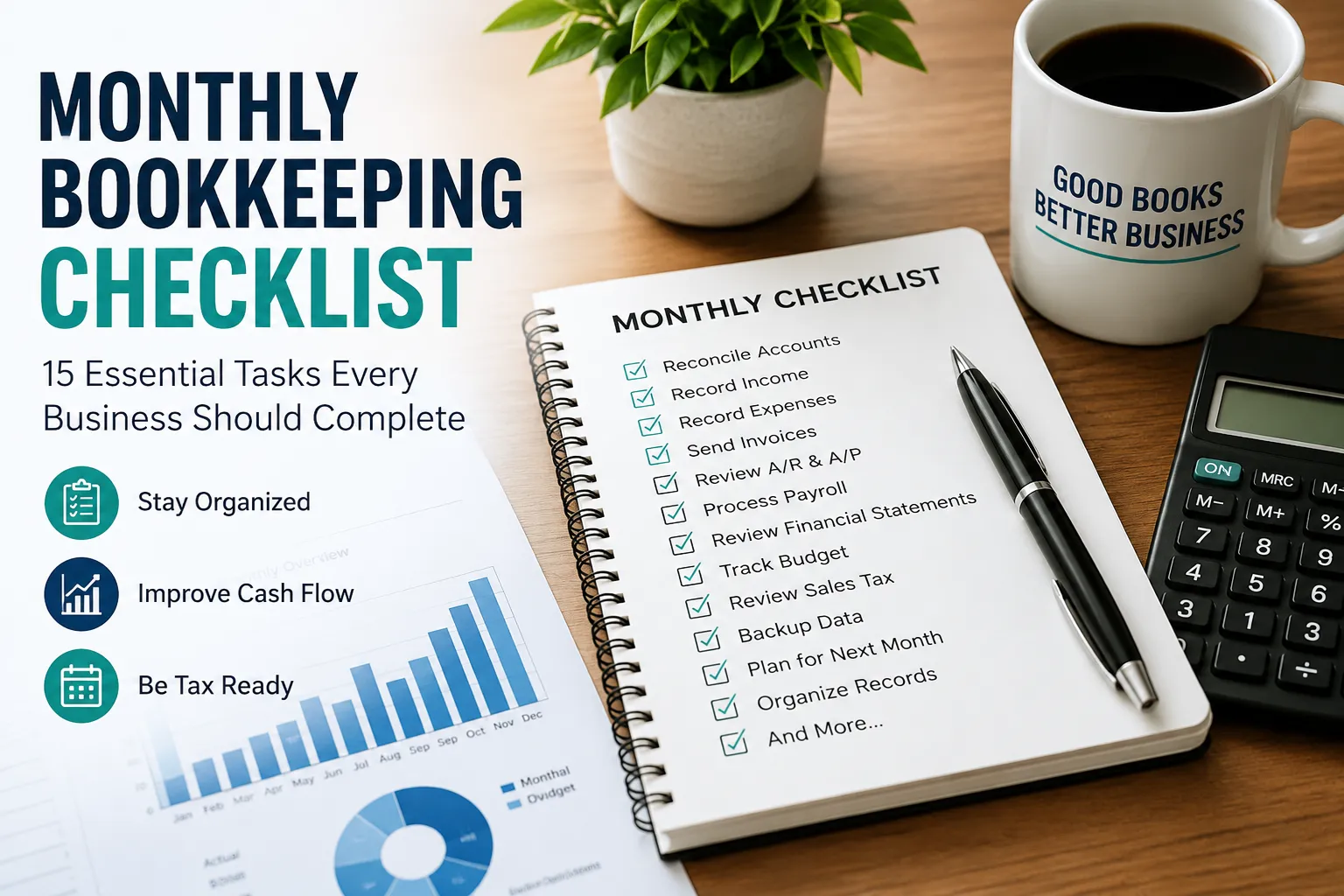
You started your business to do what you love. Not to stare at spreadsheets and reconcile bank statements. But ignoring your books does not make them go away. It just makes things worse. A monthly bookkeeping checklist changes all of that. It keeps you organized. It keeps you compliant. It keeps you sane.
Let us walk you through exactly what you need to do each month.
Why You Need a Monthly Bookkeeping Checklist
Here is the truth. Most small business owners are winging it.
They record transactions when they remember. They reconcile accounts when things get messy. They figure out taxes at the last minute. That is not a system. That is chaos.
A bookkeeping checklist gives you structure. You know exactly what to do and when to do it.
And when year-end comes around? You are already prepared. A solid small business accounting checklist means you are not scrambling for receipts or trying to reconstruct months of transactions.
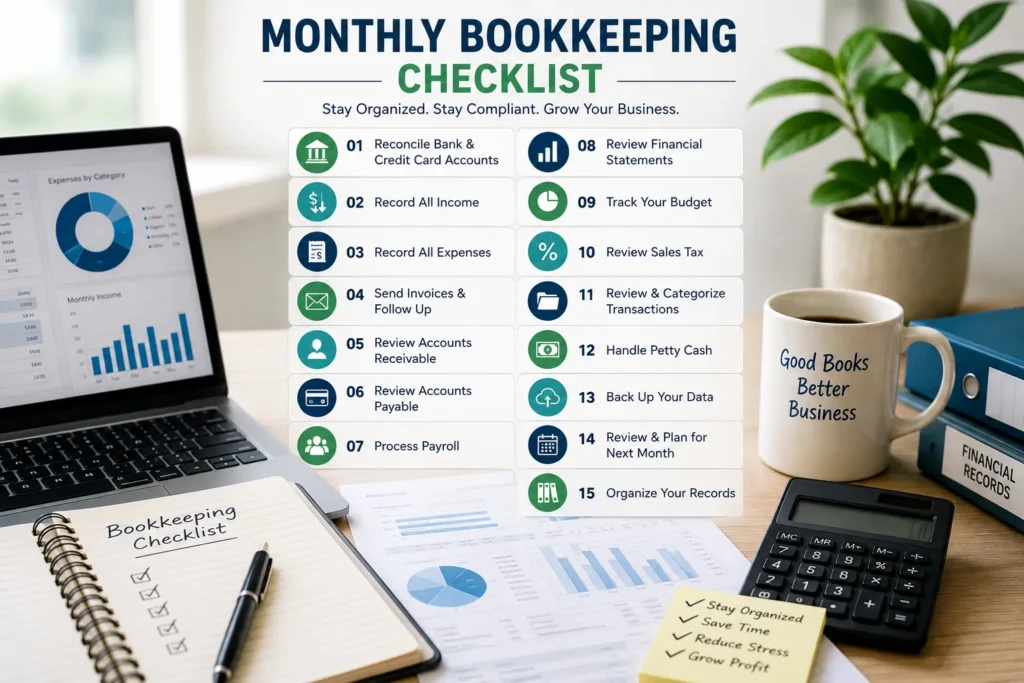
The 15 Essential Monthly Bookkeeping Tasks
Let us break down exactly the monthly bookkeeping checklist.
1. Reconcile Bank and Credit Card Accounts
This is the foundation of everything. Every single month, you compare your bank statements against your accounting records. You make sure they match. If they do not match, you find out why. Missing transactions. Duplicate entries. Bank fees you forgot about. Professional Reconciliation Services can help ensure your accounts stay accurate every month.
2. Record All Income
Every dollar that comes in needs to be recorded. Sales. Interest. Refunds. Whatever it is, log it. Make sure you categorize it correctly. This matters for taxes and for understanding where your money actually comes from.
3. Record All Expenses
Every dollar that goes out needs to be recorded too. Supplies. Utilities. Rent. Marketing. Meals. Keep your receipts. Log everything. Proper categorization makes tax time much easier in monthly bookkeeping checklist.
4. Send Invoices and Follow Up on Overdue Payments
If you are not getting paid, you are not in business. Send out invoices promptly. Track who has paid and who has not. Follow up on overdue payments. A simple reminder email often works. For chronic late payers, consider charging interest.
5. Review Accounts Receivable
Who owes you money? How old are those invoices? An aging report shows you exactly what is outstanding. Anything over 30 days needs attention. Over 90 days is a problem. Stay on top of this. Cash flow depends on a monthly bookkeeping checklist.
6. Review Accounts Payable
Who do you owe money to? Vendors. Suppliers. Service providers. Make sure you know what is due and when. Pay on time to maintain good relationships and avoid late fees.
7. Process Payroll
If you have employees, payroll is non-negotiable. Run payroll on schedule. Calculate wages, withhold taxes, make deposits. Keep accurate records. This is one area you cannot afford to mess up. Penalties for payroll errors are brutal.
8. Review Financial Statements
Your financial statements tell you how your business is actually doing. Profit and loss statement. Balance sheet. Cash flow statement. Regularly reviewing your reports with Profit and Loss Services can help identify trends and improve financial decision-making. Look at them monthly. Understand what they are telling you. Are you profitable? Are you growing? Are you bleeding cash?
9. Track Your Budget
What did you plan to spend? What did you actually spend? Compare actuals to your budget. See where you are over or under. This helps you make adjustments before things get out of hand in monthly bookkeeping checklist.
10. Review Sales Tax
If you collect sales tax, you need to track it. Set aside what you owe. File and pay on time. Sales tax is not your money. It belongs to the government. Do not treat it as extra revenue.
11. Review and Categorize Transactions
Throughout the month, you record transactions. But are they correctly categorized? Go through and clean things up. Make sure expenses are in the right accounts. Good categorization means better reporting and easier taxes.
12. Handle Petty Cash
If you have petty cash, keep it in check. Log all disbursements. Reconcile the cash on hand. Small amounts add up. Do not ignore them in your monthly bookkeeping checklist.
13. Back Up Your Data
This is easy to overlook. But it is critical. Back up your accounting data. Cloud-based systems handle this automatically, but check to make sure. Losing your financial data is a nightmare. Prevent it.
14. Review and Plan for Next Month
Bookkeeping is not just about the past. It is about the future. Look at upcoming expenses. Plan for taxes. Set goals for the next month. A year end checklist starts with monthly planning.
15. Organize Your Records
Keep your receipts, invoices, and statements organized. Digital is easier. Scan paper receipts. Store everything in a logical system. When it is time to prepare end of year business planning, you will be grateful.
How to Make Bookkeeping Easier
Bookkeeping is still a chore. But you can make it easier.
Use Accounting Software
QuickBooks. Xero. FreshBooks. Wave. There are dozens of options. They automate a lot of the work. Bank feeds. Transaction categorization. Invoicing.Spend the money. Save the time. It is worth it.
Set a Schedule
Pick a day each month. The same day every month. Block out time on your calendar. Do not skip it.Consistency is more important than perfection.
Separate Business and Personal
This is non-negotiable. Separate bank accounts. Separate credit cards. Separate everything. Mixing personal and business finances is a recipe for headaches.
Hire a Professional
If bookkeeping is not your thing, hire someone who does it well. A bookkeeper or accountant saves you time and prevents costly mistakes. The money you spend on professional help is often less than what you would lose in errors.
How This Helps with Year-End
A solid monthly routine makes year-end much easier. When you are preparing end of year accounts, you already have clean records. Everything is categorized. Everything is reconciled.
Your year end checklist for small business is basically just a review of what you have already done.
You are not scrambling. You are not stressed. You are just finishing up.
Common Mistakes to Avoid
Here are some common pitfalls to watch for in monthly bookkeeping checklist:
Not Reconciling Monthly
If you only reconcile once a year, you are asking for problems. Errors compound. Missing transactions pile up.
Mixing Personal and Business Expenses
This makes everything harder. Separate your finances.
Ignoring Cash Flow
Profit does not equal cash. A profitable business can still run out of money. Track your cash flow.
Waiting to Update Books
Update your books weekly or at least monthly. The longer you wait, the harder it is.
Not Backing Up Data
Digital records can be lost. Back them up regularly.
Conclusion:
A monthly bookkeeping checklist is not optional. It is essential. It keeps your finances in order. It prevents year-end panic. It helps you make better decisions. The 15 tasks above are not complicated. They just require consistency. Set up your routine. Stick to it. Your business will thank you.
Frequently Asked Questions
What is a monthly bookkeeping checklist?
It’s a list of financial tasks you knock out every month — reconciling accounts, recording income and expenses, sending invoices, and reviewing financial statements. Keeps you on track.
Why is a bookkeeping checklist important?
It keeps your finances organized and legit. Prevents mistakes, cuts down year-end stress, and helps you make smarter business decisions.
What are the most important bookkeeping tasks?
Reconciling bank accounts, recording income and expenses, sending invoices, and reviewing financial statements. That’s the core stuff.
How do I reconcile my bank accounts?
Compare your bank statement to your accounting records. Match every transaction. Find and fix any differences. Do this every month.
What accounting software is best for small business?
QuickBooks, Xero, and FreshBooks are solid. Wave is free and good for really small businesses. Pick what fits your needs and budget.
What is simple bookkeeping for small business?
It’s just recording income and expenses, reconciling accounts, and tracking invoices. Keeps things organized without getting complicated.
What is a year end checklist for small business?
It’s reviewing financial statements, prepping tax documents, and planning for next year. Gets you ready for tax season.
How do I prepare end of year accounts?
Review all income and expenses, reconcile accounts, and make sure all tax obligations are covered. A solid monthly routine makes it way easier.
What is a bookkeeping clean up checklist?
It helps fix messy or incomplete records. Organizes past transactions, reconciles accounts, and gets your books ready for tax filing.
What is included in a payroll year end checklist?
Verifying employee info, filing tax forms, and distributing W-2s or 1099s. Makes sure you’re compliant with payroll reporting.
